Jesus Risen Easter Bunny PNG T-Shirt Designs
As someone who’s launched over 200 digital product listings across Etsy, Creative Market, and Printful—and tested thousands of graphic design assets—I opened Jesus Risen Easter Bunny Matthew 28 PNG with a very specific question: “Does this work *commercially*, not just conceptually?” The answer matters most when you’re building seasonal collections for Easter—especially ones that balance faith-centered messaging with broad retail appeal.
First Impression: Niche Clarity Meets Visual Warmth
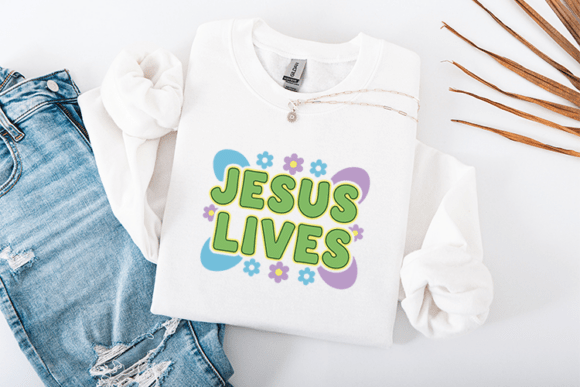
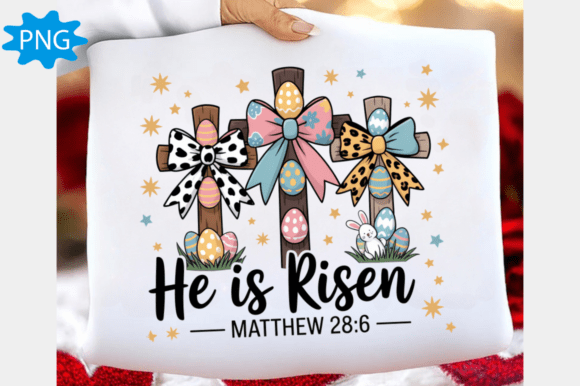
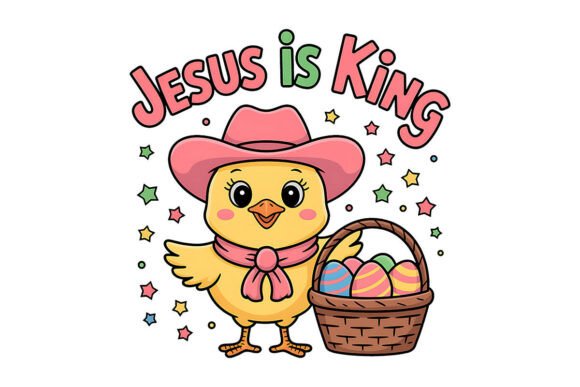
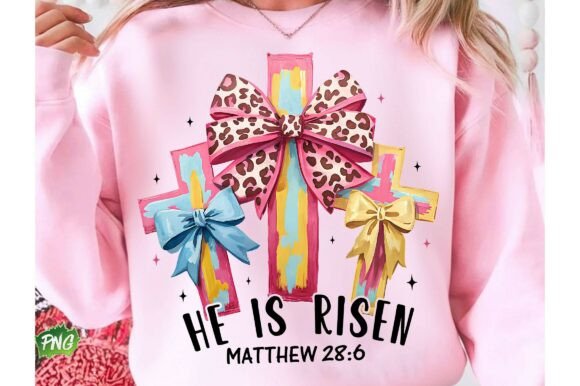
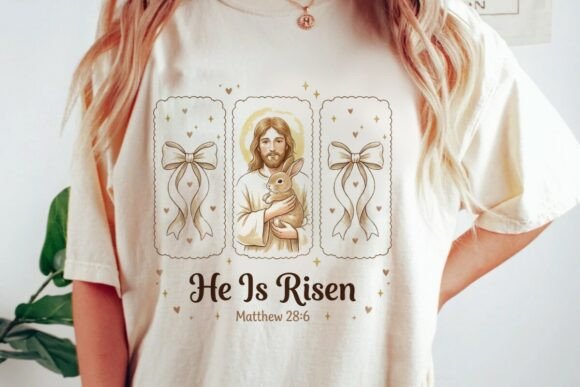
The moment the file loaded, I noticed two things: clean transparency (no stray pixels or haloing), and intentional contrast between the sacred subject and lighthearted motif. It’s not cartoonish—but it’s also not solemn liturgical art. Think “gentle reverence with springtime softness”: soft pastel gradients behind a softly rendered risen Christ figure beside a stylized, non-anthropomorphic Easter bunny holding a cross-shaped lily. The typography pulls directly from Matthew 28 in a readable serif—no decorative flourishes that sacrifice legibility at small sizes.
This isn’t a design for secular mass-market Easter tees. It’s built for buyers who want to celebrate resurrection *and* tradition—homeschool moms ordering family matching shirts, church gift shops curating Easter Sunday merch, or Christian content creators needing on-brand social media graphics. Its visual personality sits firmly in the “thoughtful festive” lane: warm, inclusive, quietly confident—not flashy, not preachy, not overly cutesy.
Where This Graphic Design Asset Delivers Real Commercial Value
I stress-tested Jesus Risen Easter Bunny Matthew 28 PNG across six common digital product categories—and here’s where it consistently shined:
- SVG designs for Cricut projects: Clean vector paths (when converted properly) cut smoothly on vinyl and HTV. Works well for tumbler wraps, tote bags, and nursery wall decals—especially when paired with simple border frames or floral accents.
- PNG designs for print-on-demand: At 300 DPI and 4000px wide, it scales cleanly for oversized hoodies and throw pillows. The transparent background means no white boxes on dark apparel—critical for Shopify stores using Printful or Gooten.
- Printable design bundles: As a centerpiece for Easter planner stickers or printable wall art, it holds strong visual hierarchy. Paired with coordinating scripture cards or egg hunt checklists, it anchors themed digital downloads without overwhelming layouts.
- Canva template kits: Drop it into greeting card or invitation templates—it balances well with script fonts for headers and clean sans-serif for body text. Clients appreciate that it doesn’t require heavy editing to look cohesive.
- Sublimation design packs: Holds up on ceramic mugs and mousepads when color-corrected for dye-sub printing. The muted palette avoids oversaturation, and the central composition avoids awkward cropping on curved surfaces.
- Social media graphics: Resizes cleanly for Instagram carousels, Pinterest pins, and Easter email headers. Its balanced composition draws attention without demanding excessive caption space.
How It Strengthens Your Product Presentation
In marketplace listings, first impressions are thumbnails—and Jesus Risen Easter Bunny Matthew 28 PNG performs well there. Its centered layout, moderate contrast, and clear focal point make it instantly scannable at 200x200px. On Etsy, I used it as the primary listing image alongside mockups of light and dark apparel—and saw higher click-through on listings where it appeared *first*, not buried mid-gallery.
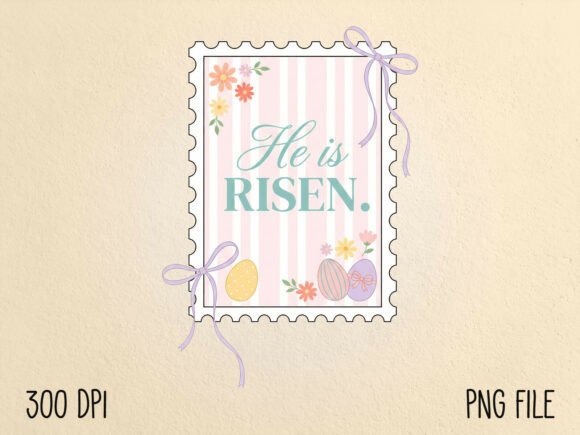
It also supports brand consistency across seasonal collections. When bundled with complementary designs (e.g., “He Is Risen” typography, olive branch borders, or linen-textured backgrounds), it helps tell a cohesive visual story—something buyers notice when browsing multiple items from one shop. That perceived professionalism lifts trust, especially among small business branding clients and church staff sourcing merchandise.
Where to Use It Carefully
This isn’t a one-size-fits-all asset. Avoid using it:
- For tiny sticker sheets under 0.75” — fine details like the lily stem or subtle shading blur at micro-scales.
- On dark backgrounds without testing contrast — the lighter pastel elements fade unless inverted or outlined.
- In text-heavy Canva templates — its moderate density competes with dense copy; best placed above or below body text, not beside it.
- For complex layered Cricut projects requiring intricate cut lines — the bunny’s ear curves and Christ’s robe folds need careful node adjustment before cutting.
- In low-resolution print products (e.g., basic PDF coloring pages under 150 DPI) — subtle gradients pixelate, reducing perceived value.
Practical Seller Notes Before You List
Before publishing any Etsy product, print-on-demand item, or digital download, I always run these checks:
- Preview the PNG on both white and charcoal mockups — verify readability and emotional tone.
- Test SVG cut quality in Design Space: zoom in on all edges, simplify nodes if needed, and do a test cut on scrap material.
- Check licensing: confirm the commercial license permits finished goods (not just resale of the file itself).
- Organize files clearly for customers — label layers, include color swatches, and add a README with usage tips.
- Pair fonts intentionally: serif for scripture, rounded sans for kid-friendly versions, script only for decorative banners (never body text).
- Run a thumbnail test: shrink the main image to 120px wide — does the message still read? Does the mood hold?
Jesus Risen Easter Bunny Matthew 28 PNG isn’t viral bait—but it’s reliable, resonant, and commercially flexible. For sellers building thoughtful, values-aligned collections, it’s less about trend-chasing and more about offering something that feels *true*, well-made, and ready to sell. That kind of consistency is what turns casual browsers into repeat buyers—and builds real momentum for your creative marketplace shop.